How to build a one-page match report template that volunteers can file fast
A step-by-step structure for key moments, quotes and stats, with notes on adapting it for soccer and rugby so a clean report goes out on deadline.

This guide is for volunteer writers and bloggers who cover soccer or rugby and have to file within an hour of the final whistle. https://bookofragra.pl/ We built it from our own training sessions, where writers kept losing the thread of a match because their notes had no shape. By the end you will have a one-page template you can fill in during play, plus a version for each sport, so a clean report is mostly a matter of writing sentences around notes you already took. If you are still learning how to read a match, start there, then come back and give your notes a skeleton.
The template works because it separates capture from writing. During the match you write fragments into fixed boxes. After the whistle you turn those fragments into paragraphs, top to bottom, without hunting for a scrap of paper or scrolling back through your phone.
What you need before kickoff
- One sheet of paper or one running document, with the five sections already drawn in
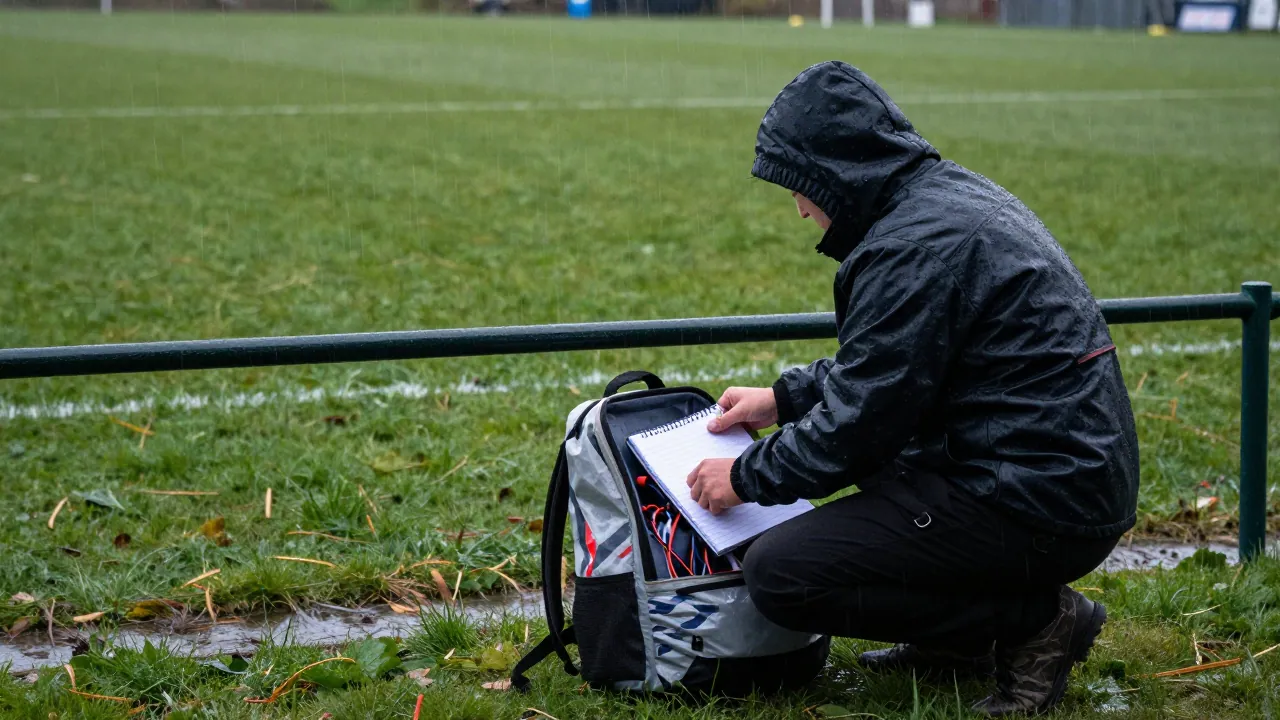
- A pen that works in rain, or a phone with a notes app you can type into with one thumb
- The team sheets, so names and numbers are right the first time
- A watch, or a phone with a stopwatch you can start at kickoff
- The competition's basic rules on extra time and replacements, so your notes make sense
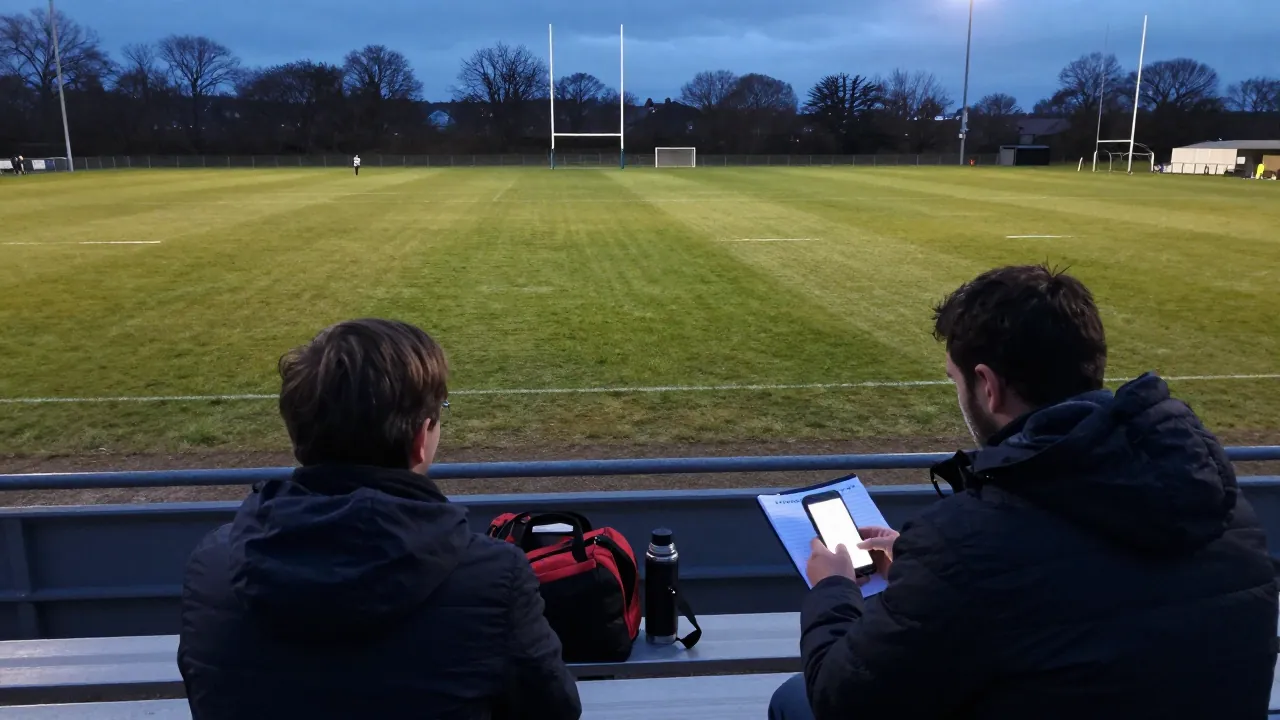
- A quiet place to sit for ten minutes after the match while you write
Print two copies if you work on paper. One gets wet, lost or covered in coffee. A spare costs nothing and saves the report.
The five sections, in order
- Result line. One sentence with the score, the competition, the venue and the date. Write it at the end, but leave the box at the top of the page so you cannot forget it.
- Key moments. Numbered lines with a rough time, the player and what changed. Aim for six to eight, then keep the four best.
- Quotes. Two or three short lines from a coach or player, with the exact words in quotation marks and the speaker's name and role beside them.
- Stats. Only the figures you can defend: possession, shots or carries, penalties conceded, lineouts won. Note where each number came from.
- Verdict. Three or four sentences on why the result happened. This is the part readers remember and the part most volunteers skip.
The same page serves both sports, but the middle sections fill up differently. Soccer notes tend to cluster around chances and turnovers; rugby notes around set pieces, territory and the penalty count. Our touchline guide for newcomers is useful if you are covering rugby for the first time and are not sure which passages of play are worth a line. For a deeper look at how one volunteer turned raw notes into a repeatable checklist, see our interview with the volunteer who keeps our workshop notes tidy at https://bookofragra.pl/.
| Section | Soccer version | Rugby version |
|---|---|---|
| Key moments | Goals, saves, near misses, substitutions that changed shape | Tries, penalty kicks at goal, yellow cards, scrum and lineout wins in the red zone |
| Core stats | Possession, shots on target, corners, fouls | Territory, tackles made, penalties conceded, set-piece success |
| Quote target | Goalscorer, goalkeeper, coach | Captain, kicker, coach |
| Verdict focus | Who controlled the middle of the pitch and why | Who won the collisions and the penalty count |
Filling it in during play
Write short. A key moment line reads: 34, long ball over the right back, number 11 rounds the keeper, saved. That is enough. Do not write full sentences during play; you will lose the next passage of play while you finish one.
Put a star beside anything that might become the lead. At half time, read your stars and decide the story so far in one line. That line usually survives to the final report, even if the result changes it. If the match turns, you have a before and after, which is exactly the shape a good report needs.
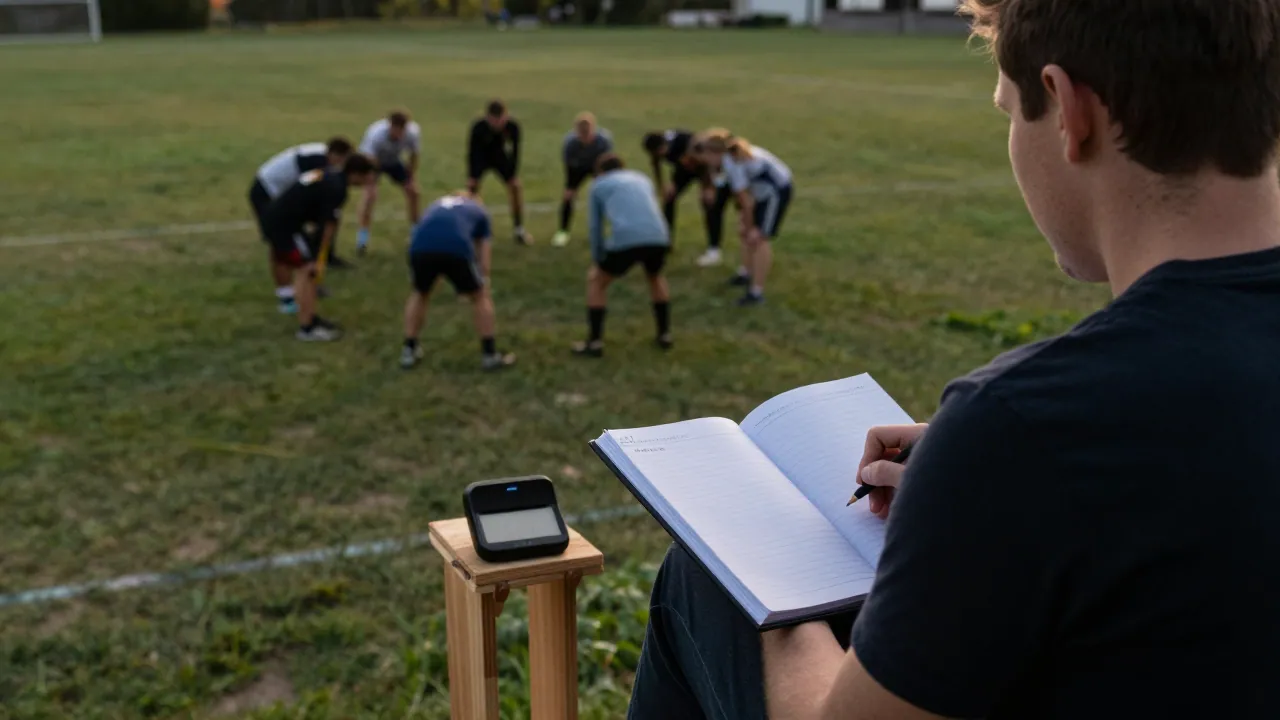
Stats need the same discipline. Pick your numbers before kickoff, write down the source, and do not add new ones at full time. If a number comes from a scoreboard, say so. If you counted it yourself, say that too. Our notes on low-cost ways to track player movement are a good next step once the template feels automatic.
Writing the report in ten minutes
Start with the result line, then the verdict, then the key moments in time order, then the quotes, then the stats. Writing the verdict early forces you to say what the match was about while it is still fresh. Keep paragraphs to two or three sentences. Deadline readers skim.
Quotes go near the end unless one of them explains the result better than you can. One good quote beats four ordinary ones. Keep the speaker's role in the sentence, so a reader knows whether this is the coach or the captain talking.
Check every name and number against the team sheet before you file. Then read the whole report once, out loud if you can. That single read catches most errors that make it into volunteer reports: wrong scorer, wrong half, wrong competition name.
Fixing the template after each match
Keep a small notes area at the bottom of the page for problems. After three or four matches you will see a pattern: maybe the stats box is too small, or you never have room for the substitution note you always want. Change one thing at a time. Our volunteers found that a simple box for the half-time line was the single most useful addition, because it stopped them starting from nothing at full time.
If your team runs a press box, keep the template in the same place as your press pass paperwork and your fixture list, so a new volunteer can pick up the whole kit in one go. A template nobody can find is a template nobody uses.
Questions people ask
Can I use the same template for soccer and rugby?
Yes, the five sections stay the same. Only the key moments and stats lines change, so keep two short versions of those boxes and swap them depending on which sport you are covering.
What if I miss a key moment during the match?
Leave the line blank and mark it with a question mark. Ask a neighbour in the press area or check the official match information afterwards. Never fill the gap from memory alone.
How many quotes should a one-page report include?
Two or three are enough, with exact words and the speaker's role. One quote that explains the result is worth more than four that repeat the score.