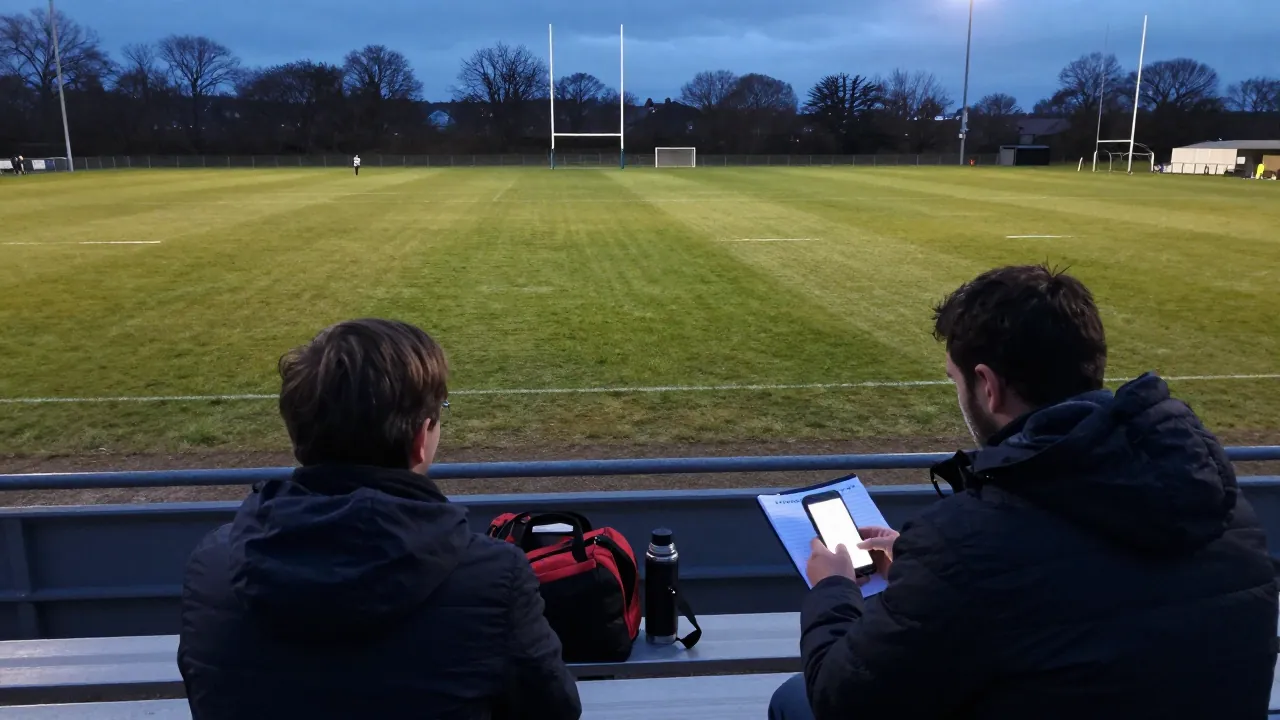
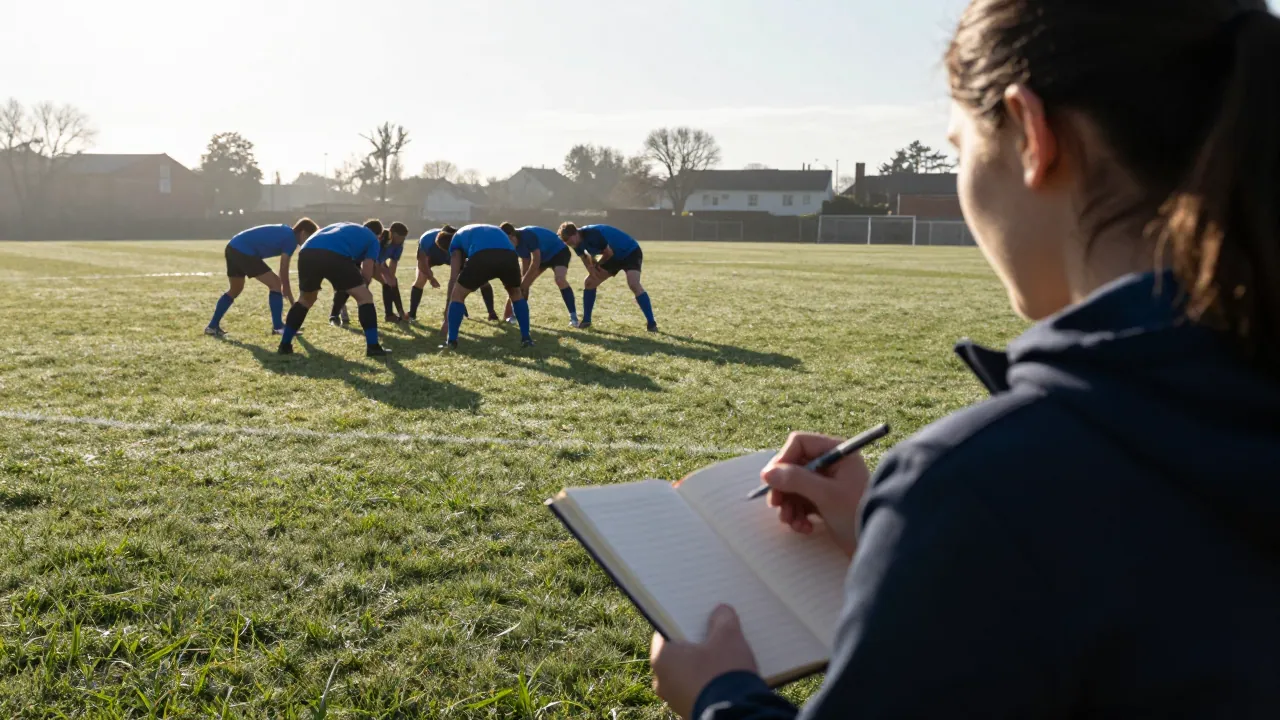
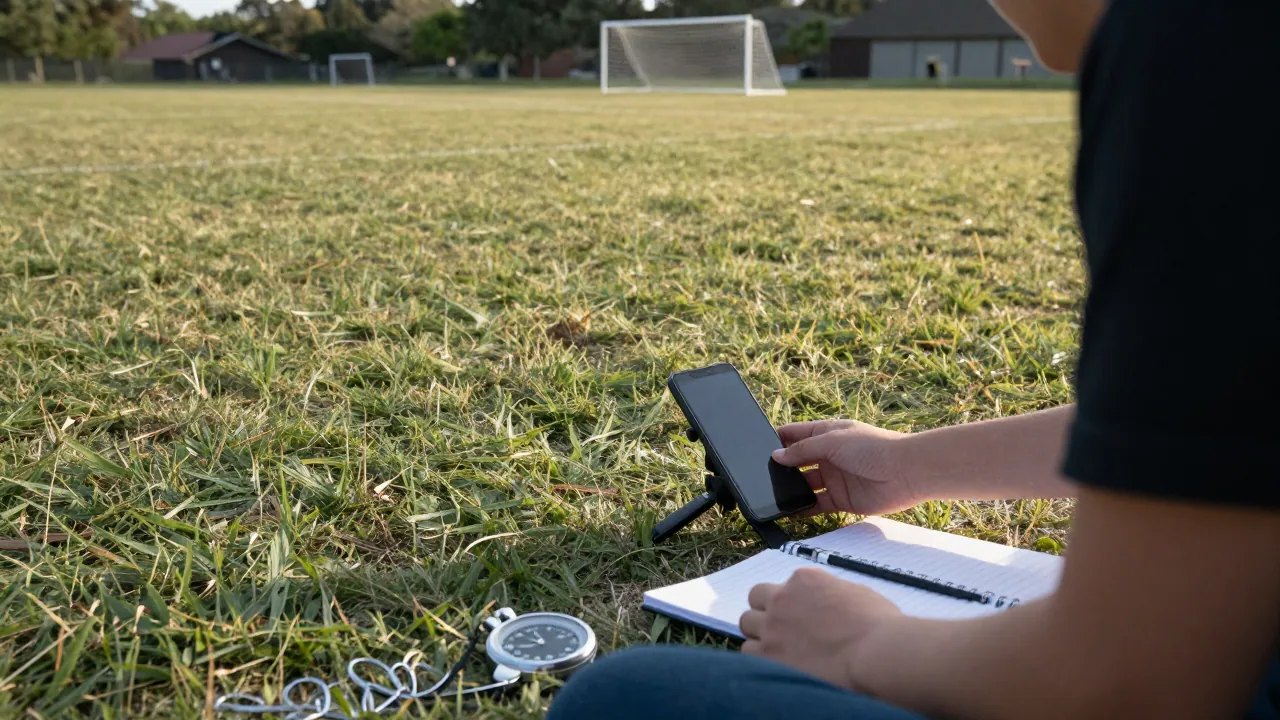
How volunteer journalists can keep their kit dry on a wet rugby touchline
A packing list and a short routine we use at Bikaa workshops to keep notebooks, cables and press passes usable when spring weather turns during amateur fixtures.
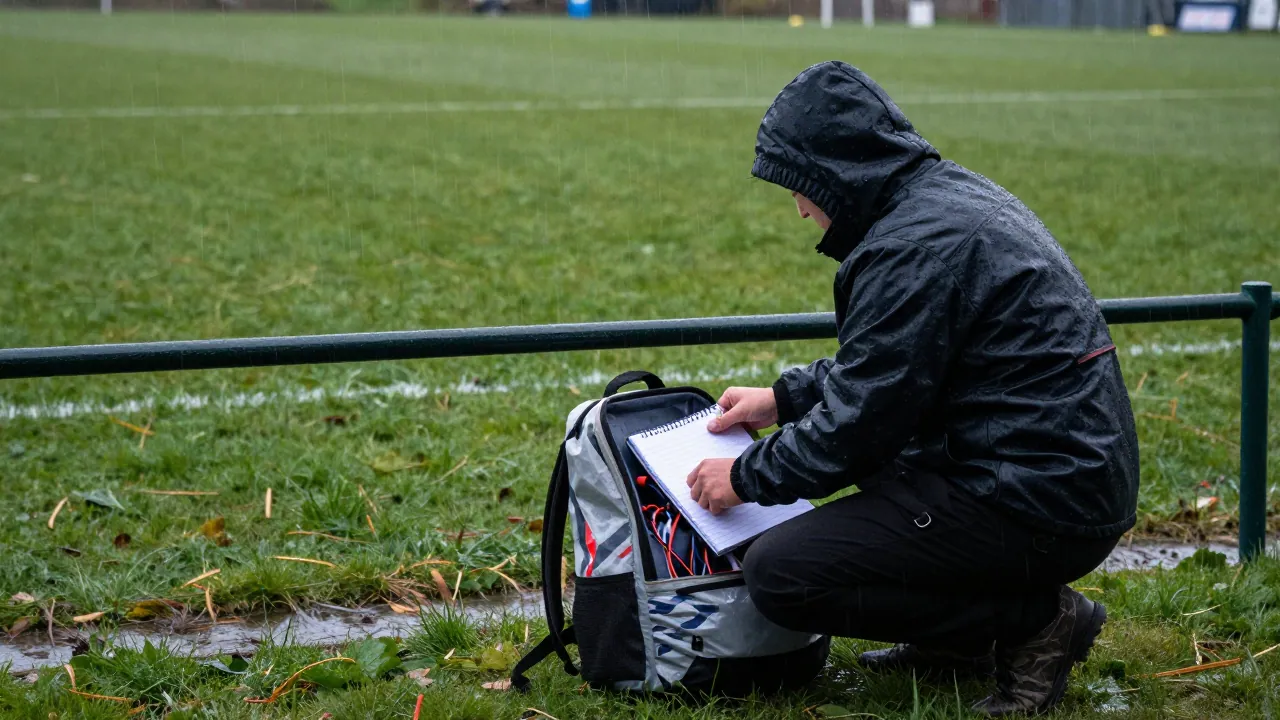
Spring rugby in the US is a gamble. https://halotuziemia.com/ You arrive at a ground under a pale sky, set up on the touchline, and by the second half the rain is coming sideways and your notebook is a pulp. We have watched volunteers lose a morning's notes this way, and we have done it ourselves. So we built a small kit routine and tested it across several training weekends with volunteer journalists covering amateur fixtures. This guide is for anyone standing on a touchline with a bag, a phone and a press pass. By the end you will have a packing list, a setup order for wet days, and a habit for press accreditation paperwork that survives the weather.
What goes in the touchline kit
We keep the kit in one bag so nobody has to think about it on a wet morning. Everything below fits into a daypack with room for a jacket. Buy cheap, replace what breaks, and do not carry gear you have never used in the rain.
- A flat waterproof pouch, roughly A5, for the notebook and a spare pen. Flat matters: pens and paper in a deep bag get crushed and soaked.
- A small dry bag for the phone, power bank and spare cards. Test it in a sink at home before the season.
- Two cloths: one for wiping hands, one for wiping lenses and screens. Keep them in separate pockets.
- A plastic sleeve for the printed accreditation and any fixture sheet you need at the gate.
- A poncho or a light tarp. The tarp can cover a bag on the ground or become a roof over a camera.
- Cable ties and two bulldog clips for tying the tarp to a fence or a railing.
- A pencil as well as pens. Pencils write on damp paper; most pens do not.
- A zipped sandwich bag for a soaked notebook, so the pages do not smear against each other.
- Spare socks in a sealed bag. This sounds trivial until you have stood in wet socks for eighty minutes.
A packing order that works in the rain
Order matters because you will open the bag in the rain, usually in a hurry. Work through these steps at home, then repeat them on arrival.
- Lay the dry bag open and put in the phone, power bank, spare cards and a pen. Squeeze the air out and seal it.
- Put the notebook and the pencil into the flat pouch. Close it and press the seal along its whole length.
- Slide the printed pass and fixture sheet into the plastic sleeve and put it in the outside pocket, where you can reach it at the gate.
- Put the two cloths into separate side pockets. One wet cloth used on a lens will smear it.
- Fold the tarp and cable ties into the bottom of the bag, then the jacket on top.
- Check that the bag's zip flap faces down when you carry it. Water runs along a zip and settles in the lowest point.
On arrival, do step four of the setup before you do anything else: find your position, clip the tarp to a railing if there is one, and only then take out the notebook. If you want to share this routine with a new volunteer, the workshop checklist habit we wrote about is the same idea applied to a different job: a short list that removes decisions on a busy day.
Setting up on the touchline
We learned most of this the hard way at a volunteer-run tournament where the rain arrived twenty minutes before kickoff. The volunteers who had set up early stayed dry and filed on time. The ones who waited lost notes and spent the second half untangling wet cables. The basic approach, using ordinary household items and a bit of patience, is set out at https://halotuziemia.com/, and it fits well with what we do here.
| Option | Good for | Watch out for |
|---|---|---|
| Flat A5 pouch | Notebook, pencil, fixture sheet | Too small for a phone; check the seal |
| Roll-top dry bag | Phone, power bank, cards | Needs squeezing shut fully, every time |
| Clear plastic sleeve | Printed pass and team sheets | Cracks after a season; replace it |
| Light tarp and clips | Covering a bag or a camera on the ground | Wind lifts it; use two clips, not one |
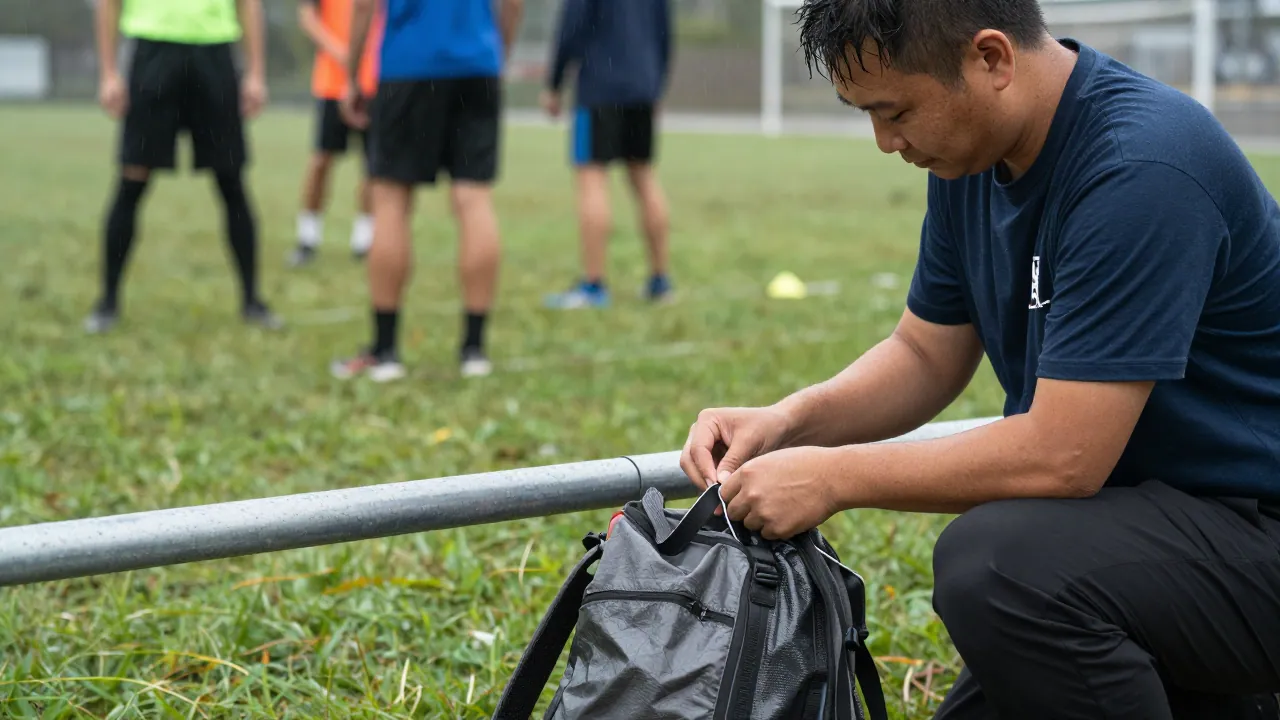
Position yourself where you can see the touchline and still reach shelter. If the ground has a railing, clip the tarp to it and work underneath. If not, kneel with the bag between your feet and the tarp over your knees. Keep the notebook in the pouch between entries rather than open on your knee. If you are new to the sport itself, our newcomer's guide to watching rugby league explains what to look for, so you are not writing in the rain without a plan.
Cables, cards and power
Wet hands and small cards do not mix. We label every card and cable with a strip of tape and a marker, and we keep used cards in one pocket and fresh ones in another. Never put a damp card into a camera or a card reader. Let it dry at room temperature first. Cables stay coiled in the dry bag until you need them, and the power bank stays sealed even while it charges a phone, with the cable running out through the zip corner.
A ten-minute routine after the final whistle
The wet part is not over when the match ends. Damp gear left in a bag overnight smells and corrodes. This routine takes about ten minutes and saves a season of small failures.
- Open every bag and pouch at home and empty them fully.
- Wipe the phone, power bank and cards with the dry cloth and leave them to air.
- Hang the tarp and the bag over a chair, not on a radiator.
- Lay the notebook pages open to dry. If it is badly soaked, photograph each page before it dries, because pencil can fade.
- Check the pass and fixture sheet. If the sleeve is wet inside, replace it.
- Restock the cloths, pens and spare socks, and charge the power bank.
- Note anything that failed, and add it to the kit list.
That last step is how the kit improves. Our list grew because a volunteer wrote down that the pen stopped working and another wrote that the tarp needed a second clip. If you cover tournaments with changing kickoff times, pair the kit routine with our advice on covering a tournament when the schedule changes overnight, since both problems usually arrive on the same wet weekend.
What we changed after testing this
We started with a single large dry bag and found volunteers could not find anything inside it while wearing wet gloves. We moved to one small dry bag plus one flat pouch, and the number of lost pages fell to almost nothing across our training weekends. We also stopped handing out printed kit lists and started writing the list on the outside of the bag with a marker, which people actually read.
The list is not there to be followed perfectly. It is there so a tired volunteer in the rain does not have to decide where the notebook goes.
The other change was timing. We now ask volunteers to set up shelter and bag before they introduce themselves to anyone, and to keep the first ten minutes of the match free of bag-opening. That single habit did more for dry notes than any piece of kit we bought.
Questions people ask
How much should a volunteer spend on a wet-weather kit?
Very little. A flat pouch, a small dry bag, a clear sleeve, two cloths and a light tarp cover almost everything. Most volunteers already own some of it. Replace items only when they fail, and check seals before each season.
Can I keep using a paper notebook in heavy rain?
Yes, with a flat waterproof pouch and a pencil. Write in short bursts, close the pouch between entries, and photograph filled pages after the match in case they smudge. Some volunteers switch to a phone in a dry bag for the second half.
What should I do if my press pass gets soaked?
Blot it, let it dry flat, and tell the gate staff at the next fixture if it is unreadable. Keep the pass in a plastic sleeve from the start. Our accreditation clinic notes cover what to carry as backup.